Glass + Recyclable Building Materials
20 January 2020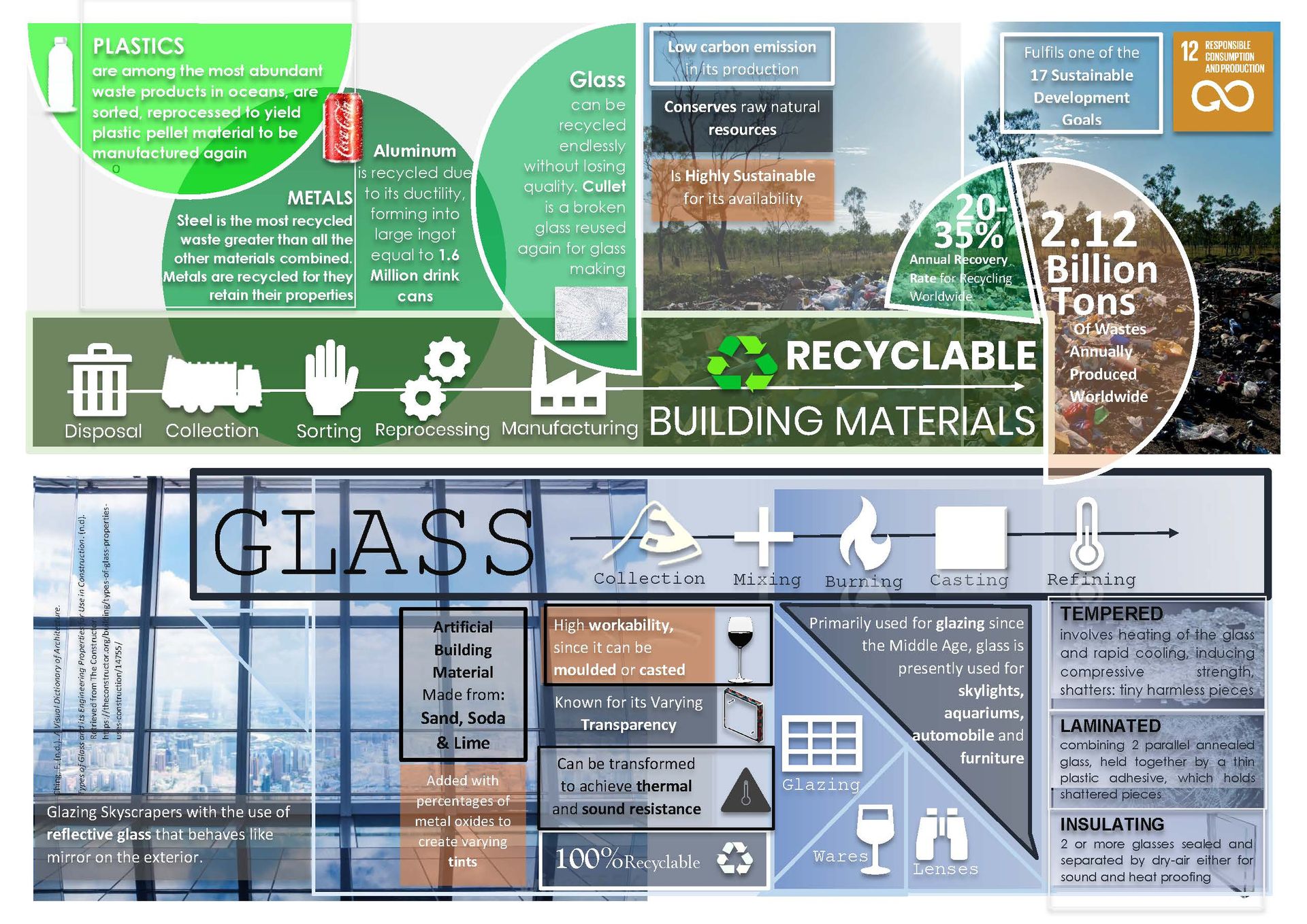
Glass
Glass is a type of solid, transparent building material used in construction, mainly
integrated for lighting, wind protection. Natural sand is discovered in 3000 BC, whereas its making originated in Europe. Glass is a processed material that was created from sand. Sand, together with soda and limestone, is melted in a furnace up to 1,500°C. It undergoes casting in which desired forms are created and then cooled.
Glass product also undergoes several processes depending on the type and use. Glass is ideally and primarily used in windows, and furniture and wares, but modern needs also make it appropriate for skylight glazing, for walls and doors in malls and high-rise infrastructures
Float glass is the most common and regular type of glass. It is also called Soda Lime glass as it contains soda and lime in its melting process. It comes in various thickness and shatters easily in large pieces of debris that may cause harm. It is commonly used in photograph, and painting framing and exhibit.
Shatterproof Glass - a temperature treated glass, harder than the float glass and made to shatter into tiny little pieces that will not hurt in close contact. This glass is utilized and installed in car windows and windshields to avoid the risk of further damage during accidents.
Laminated glass contains two parallel annealed glass sealed with a layer of plastic coating in between. Laminated glass comes in various thickness. The plastic holds the pieces together and also shields the other side when hit by an approaching object. Tinted Glass is a stained type of glass exhibiting color. Percentages of metallic elements are added in the melting process making the color variation.
Low-E Glass is a treated member of glass made to accommodate less sunlight by deflecting UV rays. These glasses are used in skylight glazing and in windows of high- rise buildings
Reflective Glass exhibits a mirror like behavior on one of its sides, and behaves like a lens from the other side. Due to its reflective property, this type is commonly used on high-rise sky scrapers, bouncing off the light making the other side not penetrated. Insulated Glass contains two parallel thick glasses and a dry air in between which is an excellent attribute to keeping warm or cold temperatures in a room.
Recyclable Building Materials
Materials that can be reused due to its durability and longer decomposition, and recyclable property. Recyclable materials are new set of building materials which may be traced back after the manufacture, mass production and disposal of known building materials such as metal, plastic and wood scraps. The manufacture of these materials has improved since technology made the easy sorting, recreation and sanitation. The properties of these materials also retain its function and durability which make it widely reusable. However, the violation of solid waste management and the insufficient facilities and equipment make it difficult to achieve a complete resource consumption reduction, moreover, the frequency of recycling of disposed is still exceeded by the disposing of products contributing to the increase of Carbon footprint and accumulation of CFCs.
Direct reusing is one form of recycling where the disposed materials are collected and sorted, used and applied directly in convenient purposes. A simple example is reusing plastic bottles for drinking, or for making plant pots. Another form of recycling undergoes a process of collection, c6olor and material sorting, melting and solidification and re-manufacturing inside large machines returning to raw materials to be used for long-term applications.
Plastic trash that are deposited on dump sites, deposited to water bodies or stored in terrestrial places can be collected and sorted from other materials such as residuals and cardboards. They are delivered to conveyor belts and sorted by their sizes by blowers. After which, they undergo a grinding process and sorted in colors by sensors and high-speed blowers, and transform them into pellets of plastic- the raw materials that can be casted again.
Metals deposited away as scraps from construction and demolition, or thrown in a form of cans from consumed goods are also manually sorted in dump sites. These are delivered to the recycling conveyor belts where they will be grinded and where powerful magnets sort the steel/iron from the non-magnetic aluminum. The metals undergo the same process of melting and refinement with lime, and then cooled and transformed into bars and eventually long sheets, which are rolled and shipped again for manufacture.
Glass is also 100 percent recyclable. When shattered glass is collected, grinded, melted It is sometimes added to new glass making or directly casted to desired shapes and sizes. Glass is extremely fragile but can be strong when heat treated or added with thickness in lamination.
The processes in which they are sorted and transformed again as raw materials for use is the proper and most sustainable way of consuming them. This reuse and recycle are ways to reduce the new raw material consumption and therefore proves that with the
help of technology and initiative, people can promote sustainability by starting to fill the obligation in solid waste disposal.